May 18

No well can be drilled without the generation of drilling wastes. The types of waste generated include drill cuttings, waste water, spent drilling fluids, completion fluids and filtration wastes. The contaminants on the waste depend largely on the types of drilling fluids used to drill the well.

The Four R’s are one of many ways to describe the waste management hierarchy approach and are important when considering what our drilling waste management product line consist of. The four R’s are:

Reduce of Drilling Waste

if we do not generate the waste in the first place, then a reduction is obvious. However, no well can be drilled without the generation of waste. It is possible though to reduce the volumes through a number of means including better planning, a reduction in hole sizes, minimizing washout through the selection of appropriate drilling fluids etc.

Reuse of Drilling Waste

solids control equipment is key to the reuse strategy. Solids control efficiencies will dictate how much drilling fluid is recovered in a suitable state for reuse in further drillings activities. Poor solids control efficiencies will lead to more solids entering the active system, further reducing their particle size, and ultimately resulting in the requirement to dump fluids as waste, or to dilute, thereby increasing volumes and costs, all of which have a negative environmental impact.

Recycle of Drilling Waste

after recovery of the drilling fluid for reuse, the drill cuttings may require further processing. The low temperature thermal treatment of NADF cuttings offers the opportunity to recycle the recovered base oil to build new drilling fluids.

Recover of Drilling Waste

high temperature thermal treatment of drill cuttings will generate a recovered hydrocarbon which is not suitable for reuse in drilling fluids due to “cracking” of the oil caused by the higher treatment temperature. However, this hydrocarbon is often suitable for recovery as a fuel oil.

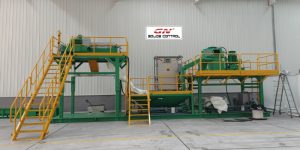
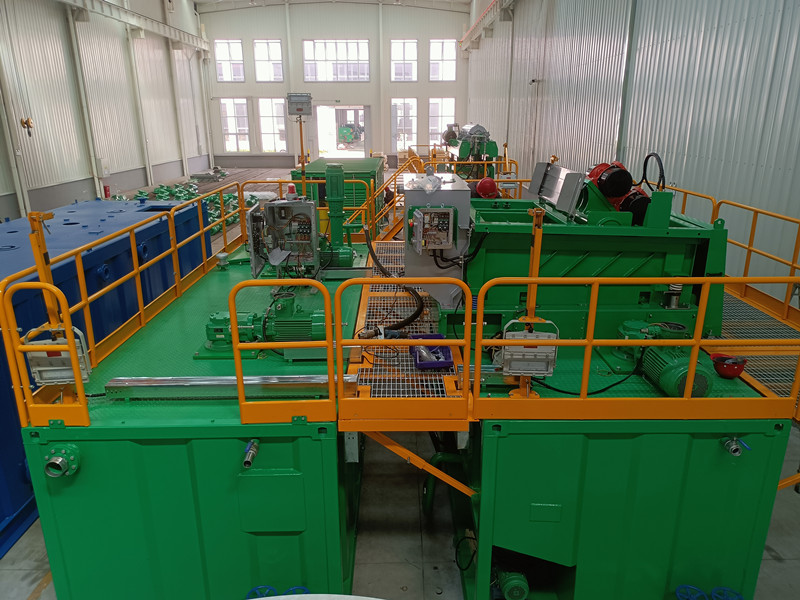
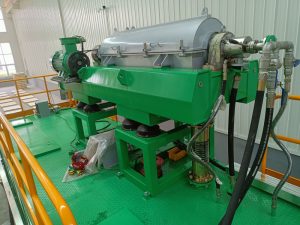
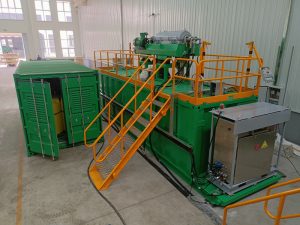
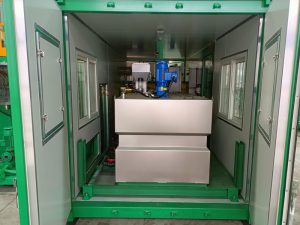
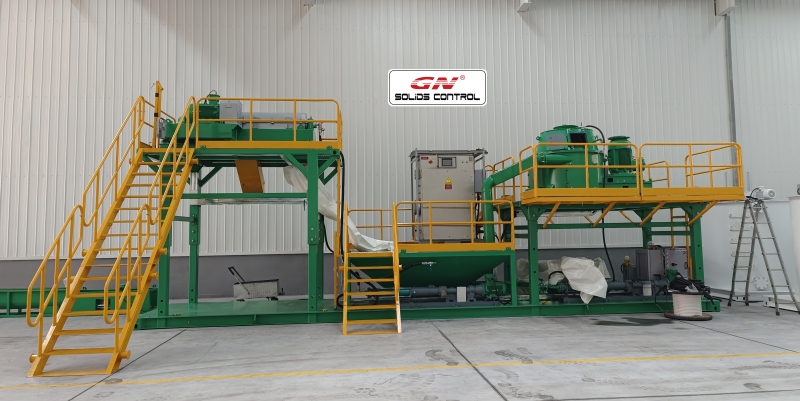
GN Solids Control is a professional supplier to offer drilling waste management equipments, please contact GN Solids for inquiry freely

Share

written by GN Shale Shaker \\ tags: , , , ,

May 11

Hydrocyclones, classified as desanders or desilters, are conical solids separation devices in which hydraulic energy is converted to centrifugal force.

Function for Hydrocyclones

Mud is fed by a centrifugal pump through the feed inlet tangentially into the feed chamber. The centrifugal forces thus developed multiple the settling velocity of the heavier phase material, forcing it toward the wall of the cone. The lighter particles move inward and upward in a spiralling vortex to the overflow opening at the top. The discharge at the top is the overflow or effluent; the discharge at the bottom in the underflow. The underflow should be in a fine spray with a slight suction at its centre. A rope discharge with no air suction is undesirable.

Flow Rate for Hydrocyclone

Desilters consist of a battery of 4-inch or smaller cones. Depending on the size of the cone, a particle size cut between 6 and 40 microns can be obtained. Even though hydrocyclones are effective in removing solids from a drilling fluid, their use is not recommended for fluids that contain significant amounts of weighting materials or muds that have expensive fluid phases. When hydrocyclones are used with these fluids, not only will undesirable drilled solids be removed, but also the weight material along with base fluid, which can be cost prohibitive.


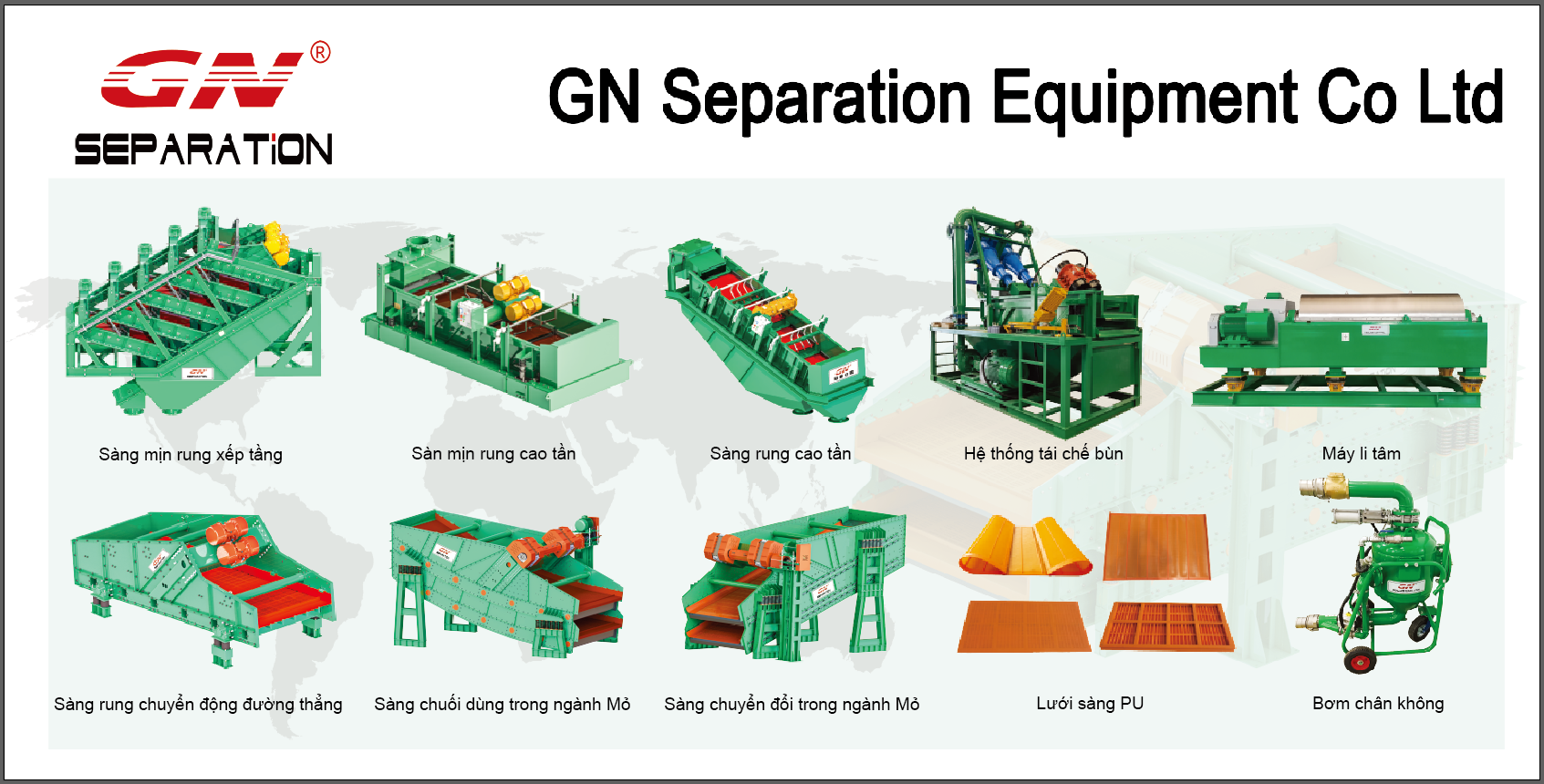
Other than hydrocyclone, GN build shale shaker, desander, desilter , mud cleaner, decanter centrifuge, etc for a complete line of solids control system. Please contact GN Solids Control freely for inquiry

Share

written by GN Shale Shaker \\ tags: , , ,

May 04

Shale shaker is the first phase solids control equipment which is very important for following solids control. Here will give a full function introduction of shale shaker

Purpose of Shaker Performance

The shale shakers performance can be easily observed, all aspects of its operation are visible. Shale shakers provide the advantage of not degrading soft or friable cuttings. When well operated and maintained, shale shakers can produce a relatively dry cuttings discharge.

Function of Shale Shaker

In unweighted muds, the shale shaker’s main role is to remove as much solids as possible and reduce the solids loading to the downstream hydrocyclones and centrifuges to improve their efficiency. In muds containing solid weighting agents such as barite, the shale shaker is the primary solids removal device. It is usually relied upon to remove all drilled cuttings coarser than the weighting material. Downstream equipment will often remove too much valuable weighting material.

Shaker Performance is a Function of:

Vibration motion

• Vibration dynamics

• Deck size and configuration

• Shaker screen characteristics

• Mud rheology (plastic viscosity)

• Solids loading rate (penetration rate, hole diameter)

GN Solids Control is a professional manufacturer in China for shale shaker, and also a complete line of solids control system. Please contact us for inquiry freely

Share

written by GN Shale Shaker

Apr 26

API RP 13C is a new physical testing and labelling procedure for shaker screens. To be API RP 13C compliant, a screen must be tested and labelled in accordance with the new recommended practice. The tests describe a screen without predicting its performance and can be performed anywhere in the world. Internationally, API RP 13C will become ISO 13501.

API RP 13 C Screen Cut Point

The API RP 13C shaker screen cut point test is based on a time-proven testing method used by ASTM to classify particles by size. The procedure utilizes a series of standard-size screens (sieves), which have been used for such analysis since 1910. The API standards committee simply adapted the use of these sieves to designating shaker screens. The shaker screen designation is identified by matching the screen’s cut point to the closest ASTM sieve cut point.

Hook Strip Screens

Hook strip screens are also available. Because of the superior life characteristics of the panel mount units, they have been relegated to a minor role on linear motion machines, although they are used extensively on circular and elliptical motion machines. Proper tensioning (and frequent retensioning) of all screen types is good screen management and can significantly increase screen life. Individual manufacturers operation manuals should be consulted to obtain the proper installation methods and torque requirements, where applicable, for specific screens/ panels.

Bonded Screens

Several types of bonded screens are available. The repairable perforated plate screen has one or more layers of fine mesh cloth bonded to a sheet of metal or plastic with punched, patterned holes. Perforated plate designs are available in various opening sizes and patterns. Additional designs include a special application where backing and fine screen(s) materials are bonded together, eliminating the need for perforated plates. Flat-surfaced, pretensioned screen panels are becoming popular because of their even tensioning, easy installation, and the even distribution of liquids and solids across the screen deck.

There are many manufacturers for API RP 13C standard shale shaker screen, GN Solids Control is one manufacturer in China build shale shakers as well as shaker screens with more knowleage of screen and shakers. Please contact us for inquiry freely

Share

written by GN Shale Shaker \\ tags: , , , , ,

Apr 19

Balanced Elliptical Motion Shaker

The latest design shale shaker  have the motors placed above the basket and produce a ‘lazy’ elliptical motion. Recommended Applications :General solids removal. Equally good in water based and oil based drilling fluids

Unbalanced Elliptical Motion Shaker

The difference between circular motion and unbalanced elliptical notion is a matter of vibrator placement. To achieve unbalanced elliptical motion, the vibrator motors are typically located above the shaker basket. Because the vibrator counterweights no longer rotate about the shaker’s centre of gravity, torque is applied on the shaker basket. This causes a rocking motion which generates different vibration patterns to occur along the length of the basket, hence the item “unbalanced”.

Linear Motion Shaker

Linear motion shaker is the most popular shaker in the world till now and  is achieved by using two counter rotating vibrators which, because of their positioning and vibration dynamics, will naturally operated in phase. They are located so that a line drawn from the shaker’s centre of gravity bisects at 90˚ a line drawn between the two axis of rotation.

Because the counterweights rotate in opposite directions, the net force on the shaker basket is zero except along a line passing through the shaker’s centre of gravity. The resultant shaker motion is therefore “linear”. The angle of this line of motion is usually at 45-50˚ relative to the shaker deck to achieve maximum solids conveyance. Because acceleration is applied through the shaker CG, the basket is dynamically balanced; the same pattern of motion will exist at all points along the shaker.

GN Solids Control is one professional manufacturer for shale shaker with professional knowledge on shaker vibrating motion. Please contact us freely

Share

written by GN Shale Shaker \\ tags: , , , , ,

Apr 12

Cuttings Re-Injection

Cuttings Re-Injection (CRI) is an in situ method for the disposal of drill cuttings and other drilling wastes into a sub-surface stratum. Drill cuttings are slurrifi ed with water (fresh or sea water) and ground down to a pre-determined particle size. The particle size is achieved by passing through a shaker screen. Slurry of the correct particle size and physical properties is injected via a pump, which is typically of a triplex design, into the well head at a given pressure and down into the predetermined sub-surface injection zone. Oversize particles from the shaker are re-circulated for further grinding.

Drill Cuttings Thermal Treatment

This thermal process is designed to treat NADF Drill Cuttings (base oil can be diesel, low toxicity, or synthetic), which reduces the oil on the solids exit the process to < 1% dry weight, and recovers the valuable base oil in a state suitable for reuse. This process has been successfully operated and therefore licensed in the UK and Holland. To date the operating plants have processed well in excess of 100,000 MT of drill cuttings after shale shaker. The process is not designed for processing water based waste or wastes with a very high liquid content. The process is not suitable for processing ester based drill cuttings, as the ester breaks down at the process temperatures.

Chemically Enhanced Centrifugation For Cuttings

Cuttings Chemically Enhanced Centrifugation, CEC, otherwise known as fl occulation, is a method to enhance the remove of fi ne solids in WBM through a centrifuge. Small quantities of additives are mixed with the used WBM, which coagulate and fl occulate fi ne colloidal solids into a larger clumps, which are then easily removed using a centrifuge. CEC reduces the volume of waste mud generated as it allows the clarifi ed fl uid to be reused to build new drilling fl uids. Overall the total volume of waste, the size of the pits, and the quantity of water required per well are all reduced.

Drill Cuttings Soidification and Stabilisation

Oily drill cuttings from the shale shakers may not be suitable for direct disposal to land without further treatment. Regulations in some countries require the “waste” to meet certain criteria such as the leachability of specifi ed contaminants. Solidifi cation and stabilisation of the drilling waste is a method whereby the raw cuttings from the shaker / centrifuge are mixed with additives in order that the treated wastes will meet the criteria for land disposal. Solidifi cation typically refers to encapsulating the waste such that the leachability of contaminants is reduced by minimising the surface area of the waste exposed to leaching, or by totally encapsulating the waste with an impervious layer.

Please contact GN Solids Control for inquiry of drilling cuttings treatment equipment

Share

written by GN Shale Shaker \\ tags: , , , ,